Female Circumcision and Footbinding

Standard

I was alerted to an article in the New York Times recently about female genital mutilation (also known as female circumcision) in Africa. Young girls are taken to a “cutter” who carves out their clitoris and labia with a razor, then stitches the flesh back together, leaving a small opening for urination and menstruation. The purpose is for ensuring chastity and “lowering the sex drive of our daughters,” according to one practitioner.

The reporter notes that this is “a form of oppression that women themselves embrace and perpetuate.” I’m reminded of the similarities with footbinding. Women were the ones who carried out the process within the family (usually the mother or grandmother), and they were often the most resistant to change when the practice began to fall out of favor. In fact, even after it was officially banned in 1912, it would continue for over 30 years afterwards, perpetuated by women themselves.

While female genital mutilation is currently illegal in several African and Middle Eastern countries, it is still practiced widely and has even found its way to the U.S. Let’s hope it will be eradicated soon, and, like footbinding, seen as the inhumane violence against women that it is.
Cinematic Celebrations of Centenary

Standard

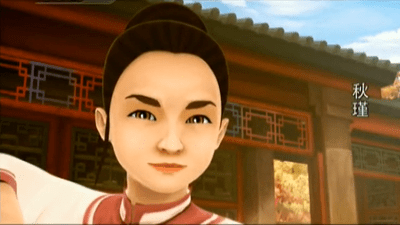
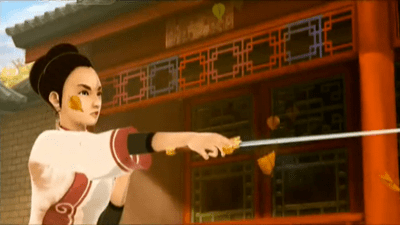
In addition to Jackie Chan’s film 1911, Taiwan is producing an animated feature on Sun Yat-sen and his comrades to commemorate the 1911 Revolution centenary. I grabbed a couple screenshots from the trailer featuring Qiu Jin:

She looks a bit like Li Jing (maybe it’s the similar poses).

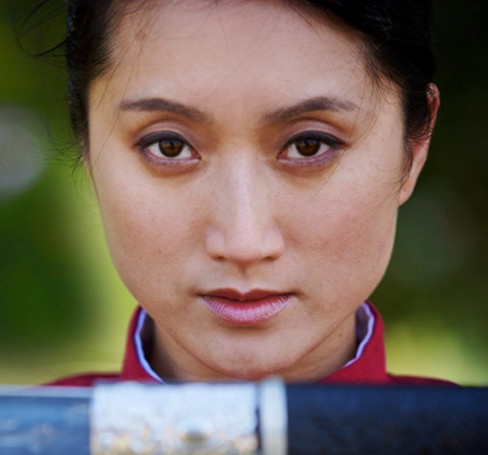
Here’s a portrait of Qiu Jin as played by Ning Jing in the Jackie Chan film. I like the androgynous quality of her face set against the traditional feminine dress.

Both films are set to be released later this year. It’ll be interesting to see how our heroine is depicted in these versions!

A Century of Change: China 1911-2011

Standard

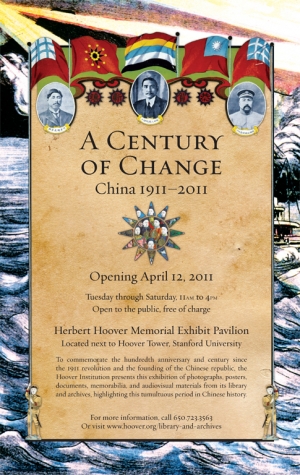
The Hoover Institution Archives at Stanford University is celebrating the 100 years anniversary of the 1911 Revolution with a new exhibit featuring archival materials and audiovisual media from its collection, as well as a few props from AUTUMN GEM in its section on “Reformers and Revolutionaries.” Adam and I attended the reception and were impressed with the scope of the exhibit, covering the momentous changes during this critical period in Chinese history.

We were treated to a special viewing of the original diaries of Chiang Kai-shek, on display for one day only during the reception. The diaries were loaned to the Hoover Archives in 2005 by members of the Chiang family for preservation purposes and are rarely shown in public.

Also on display was a section about the Rape of Nanking and the work of Iris Chang. We had the pleasure of meeting her parents there, whom we found out had ties to both our families. They were good friends of my aunt and uncle in Illinois, as well as Adam’s uncle in New Jersey. Small world! Ying-Ying Chang, Iris’ mother, recently wrote a memoir of her daughter, “The Woman Who Could Not Forget.” She’ll be giving a book reading in the Bay Area in mid-May, which we’re looking forward to.

The Hoover exhibit will be on display through March 2012. It’s a fascinating look into China’s emergence as a modern nation and is worth checking out.

“A Century of Change: China 1911-2011”
Herbert Hoover Memorial Exhibit Pavilion
(adjacent to Hoover Tower)
Stanford University
Open Tuesday – Saturday
11:00am – 4:00pm
Free admission

http://www.hoover.org/library-and-archives/exhibits/71296